
MATISS-4 on board the ISS: 6TEC contributes to a major scientific experiment
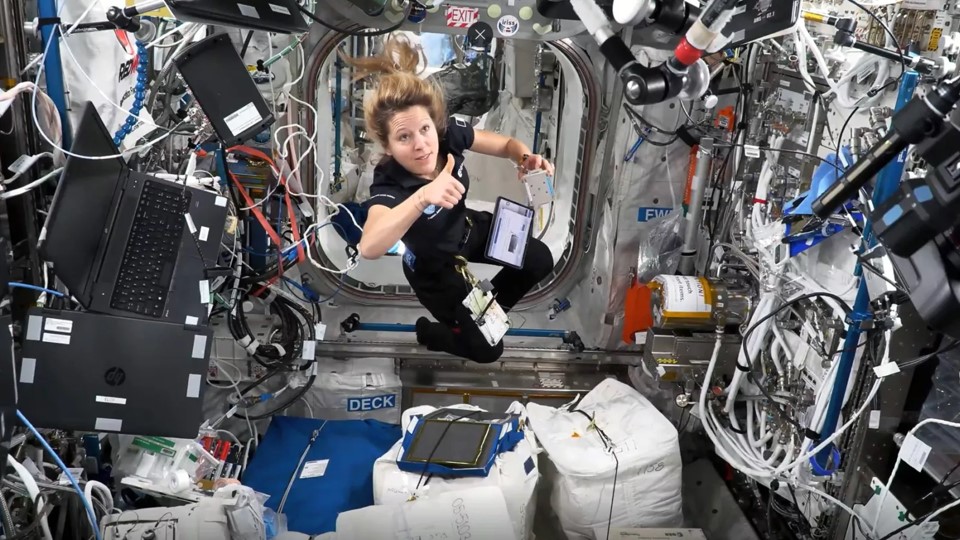
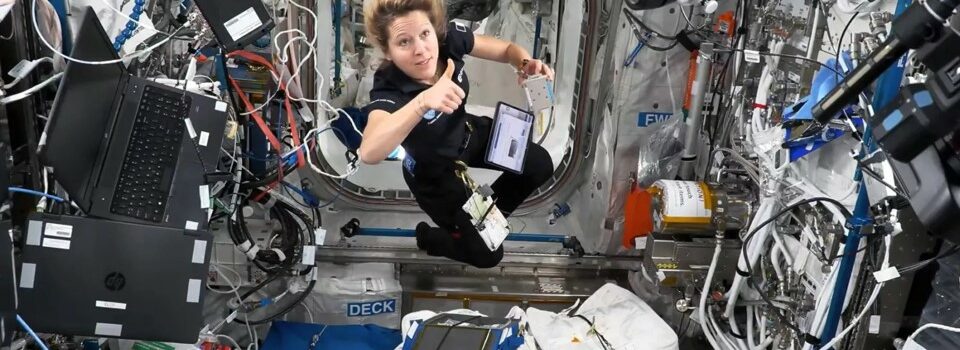
On 17 April 2026, French ESA astronaut Sophie Adenot installed the four units of the MatISS-4 experiment on board the European Columbus module in the International Space Station (ISS). This experiment forms part of the CNES’s Epsilon mission, which comprises seven new French experiments developed by CADMOS, the CNES unit dedicated to microgravity research and crewed exploration.
A major challenge: combating biocontamination in space
MatISS-4 is a passive device designed to collect and trap biological contaminants present in the station’s atmosphere. Its aim is to study how innovative surfaces could halt the development of pathogenic microorganisms by repelling microbes, limiting their growth or preventing the formation of biofilms.
In practical terms, the experiment consists of four boxes the size of a mobile phone, each containing glass slides with various surface treatments. After several months of exposure to the air on the ISS, the boxes will be hermetically sealed and returned to Earth for analysis, notably at the European synchrotron in Grenoble. The results could, in the long term, find applications in confined environments such as hospitals, submarines or public transport. 1
6TEC’s contribution
6TEC has contributed its expertise to this ambitious space project by assisting with the design and mechanical construction of the MatISS-4 experiment. The design of the enclosures — which had to meet strict requirements for space qualification, compactness and reliability in microgravity — drew on the company’s expertise in precision engineering. This collaboration illustrates 6TEC’s commitment to working alongside key players in French space research, in the service of science and innovation.
MATISS-4 à bord de l’ISS : 6TEC contribue à une expérience scientifique d’envergure
Le 17 avril 2026, l’astronaute française de l’ESA Sophie Adenot a installé les quatre boîtiers de l’expérience MatISS-4 à bord du module européen Columbus, dans la Station spatiale internationale (ISS). Cette expérience s’inscrit dans le cadre de la mission Epsilon du CNES, qui regroupe sept nouvelles expériences françaises développées par le CADMOS, l’entité du CNES dédiée à la recherche en micropesanteur et à l’exploration habitée.
Un enjeu majeur : lutter contre la bio contamination dans l’espace
MatISS-4 est un dispositif passif conçu pour collecter et piéger les contaminants biologiques présents dans l’atmosphère de la station. Son objectif est d’étudier comment des surfaces innovantes pourraient stopper le développement de micro-organismes pathogènes, en repoussant les microbes, en limitant leur croissance ou en empêchant la formation de biofilms.
Concrètement, l’expérience se présente sous la forme de quatre boîtiers de la taille d’un téléphone portable, contenant chacun des lamelles de verre aux traitements de surface variés. Après plusieurs mois d’exposition à l’air de l’ISS, les boîtiers seront hermétiquement refermés et renvoyés sur Terre pour analyse, notamment au synchrotron européen de Grenoble. Les résultats pourraient, à terme, trouver des applications dans des milieux confinés tels que les hôpitaux, les sous-marins ou les transports en commun. 1
La contribution de 6TEC
6TEC a apporté son expertise à ce projet spatial ambitieux en contribuant à l’étude et à la réalisation mécanique de l’expérience MatISS-4. La conception des boîtiers — devant répondre aux exigences strictes de qualification spatiale, de compacité et de fiabilité en micropesanteur — a mobilisé le savoir-faire en mécanique de précision. Cette collaboration illustre l’engagement de 6TEC aux côtés des acteurs de la recherche spatiale française, au service de la science et de l’innovation.